Does ‘Be Yourself’ Make You Better — or Worse?
3 min read
“My parents were Nazis,” she said. “And they taught me to be authentic.”
I was taken aback. What did she mean?
We were talking in a church youth group, and she explained that she had later turned away from the ideology she had grown up with.
Being authentic – being true to yourself – was something I believed in deeply. How could such an ideal be connected to Nazism?
As she went on to describe her parents' worldview, I remember thinking: this sounds a bit like Nietzsche – the emphasis on unlimited self-assertion, contempt for inhibition and moral constraints, the "will to power." I began to see how such ideas could fit together.
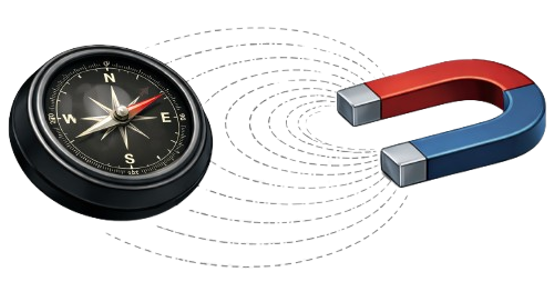
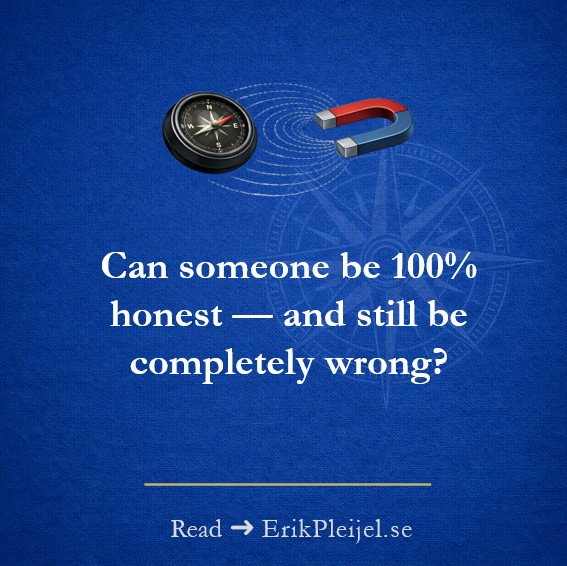
What does it really mean to "be authentic"? Many understand it as giving free rein to one's feelings and not holding them back. With such an interpretation, even an SS officer might have believed he was living "authentically" and "honestly." Without an ethical North Star, authenticity easily collapses into cruelty.
But it can also mean something very different: living in alignment with one's values and convictions. It means becoming a well-integrated person whose thoughts, emotions, and actions pull in the same direction – someone with the inner strength to resist not only external pressure, but also one's own impulses.
Both of these views are called authentic. Here we face a fork in the road, leading in radically different directions.
At a deeper level, it becomes a question of identity. Who do you want to be when you are yourself?
Be true to yourself – yes, but true to what, exactly? To a passing feeling or to good values? Is it an excuse to offload raw impulses? Or is it about being true to what is true?
The next time someone tells you to “just be yourself”, send them this:
“Be yourself” is common self-help advice. But think how often bad behaviour gets a free pass just because it’s called “authentic”. Can a person do evil and still feel authentic? Read the story (2 minutes): ErikPleijel.com
Link copied ✓
Suppose being authentic means following your values and reason. Then a new challenge appears: what do you do when your feelings pull one way and your values another?
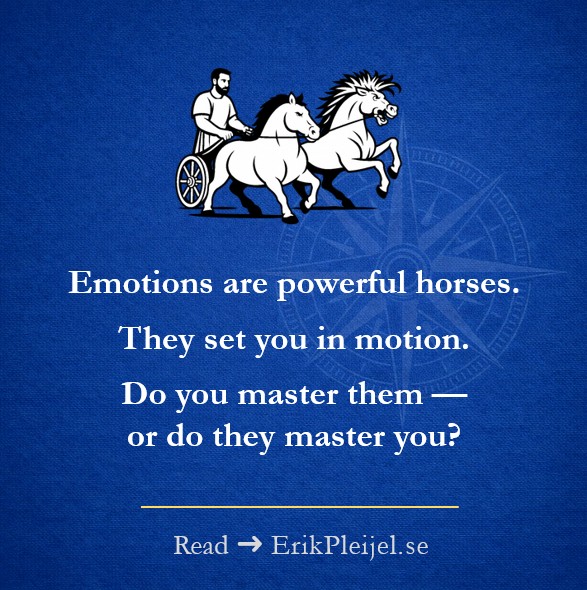
As Plato pictured it, reason is like a charioteer guiding one strong and one unruly horse along the right path.
Virtue is the art of bringing reason, desires and emotions into harmony.
Without it, the unruly horse drags the chariot into the ditch. We see this in politics: when powerful leaders lack self-control, others pay the price.
Link copied ✓
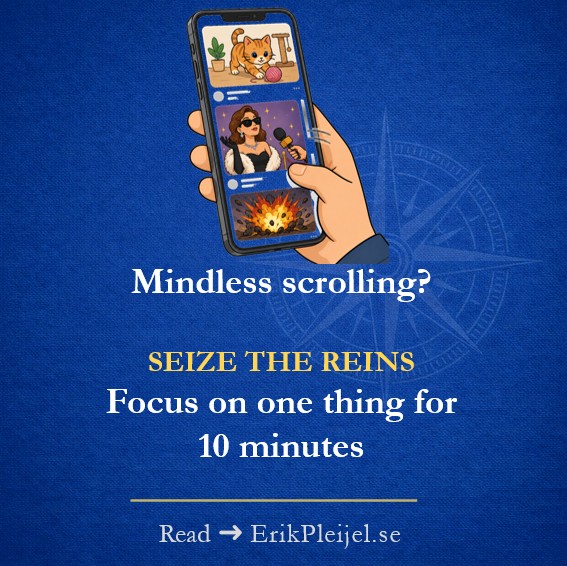
Emotions are crucial. They give us energy and set us in motion. But we often react on impulse: “I hate this,” “I love that.” Social media feeds are built to exploit exactly that.
When every impression triggers a reflex, our inner brakes are off. Without a pause for reflection, good judgment fades, integrity weakens, and we become easy targets for manipulation.
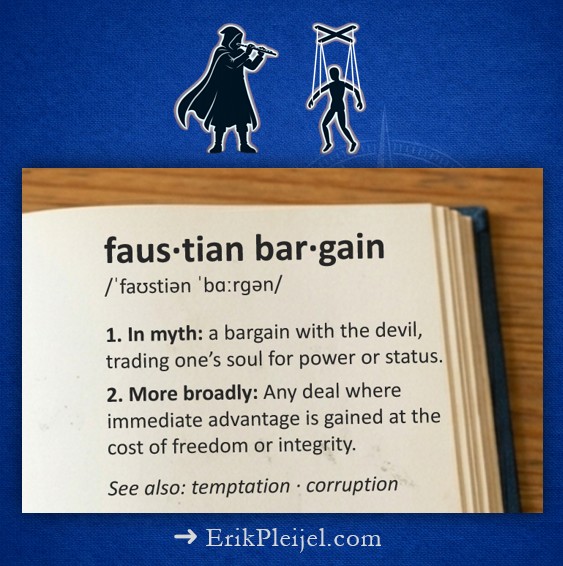
If you cannot steer your own chariot, someone else will take the reins. Then you have sold your soul and lost your freedom.
Link copied ✓
Read on in Faustian Bargain? No Thanks!
-
Escaping the Prison of Toxic Passions
8 min
I share my experiences from Rwanda in 1994. These “lessons learnt from ground zero” show what can happen when the inner moral compass fails – and how two great traditions come to our aid.
-
Bulwark: The seven Classical Virtues as a Spiritual Defence
13 min
Selling one’s soul for power is a timeless temptation. Ordinary people can do terrible things when the right buttons are pushed. But there is an ancient defence built for precisely this battle.
Faustian Bargain? No Thanks!

“Without an inner defence against toxic passions, something begins to break. Integrity cracks – and the soul goes up for sale…”

Or read the whole book free online
A few thoughts from the book
In a time of easy answers, share something that makes people stop and think.